You must have routine sanitation based upon risk factors, food processing capacity, food allergen presence, and regulatory checks, combined with documented records supporting food safety protocols, inspection results, and government health requirements. The following sections describe essential sanitation program components.
Key Takeaways
- Sanitation experts in Brampton support restaurants, grocery departments, commissaries, warehouses, bakeries, schools, mobile vendors, and allergen-sensitive operations.
- Cross-contamination prevention is ensured by treating frequently contacted areas, food-contact equipment, kitchens, floors, drains, restrooms, and storage areas with zone-based workflows.
- Confirmation of approved sanitizer dilution, compatibility, and contact time is executed by approved contractors, with completion documented using checks, reviews, and action records.
- Everyday, periodic, and annual operations designated by zone make up hygiene schedules grounded on threat, throughput, transitions, accidents, and guidelines.
- Pick suppliers with HACCP, public-health, expertise, WHMIS, preparation, insurance, endorsements, coded tools, and compliance-ready hygiene paperwork.
Which Brampton Operations Need Food Safety Cleaning?
Food safety cleaning is essential for any Brampton facility that manages, stores, prepares, packages, or distributes food. Apply it to your facility if it is subject to public health inspection, food premises regulations, or internal HACCP-based controls. This includes food service venues, employee dining, supply facilities, retail sections, butcheries, seafood counters, retail shops, and facility kitchens.
You also need compliant food safety cleaning in supply warehouses, manufacturing facilities, refrigerated storage, bakeries, school feeding programs, reception facilities, and delivery centers. Temporary and mobile establishments count too, including mobile kitchens, festival sellers, and temporary food stands. If your staff process ingredients, portion ready-to-eat items, reheat products, or store allergens, your facility needs written cleaning standards. In Brampton, food safety isn't elective; it's part of lawful, functional, and customer safety adherence.
What Services Do Brampton Cleaning Experts Provide?
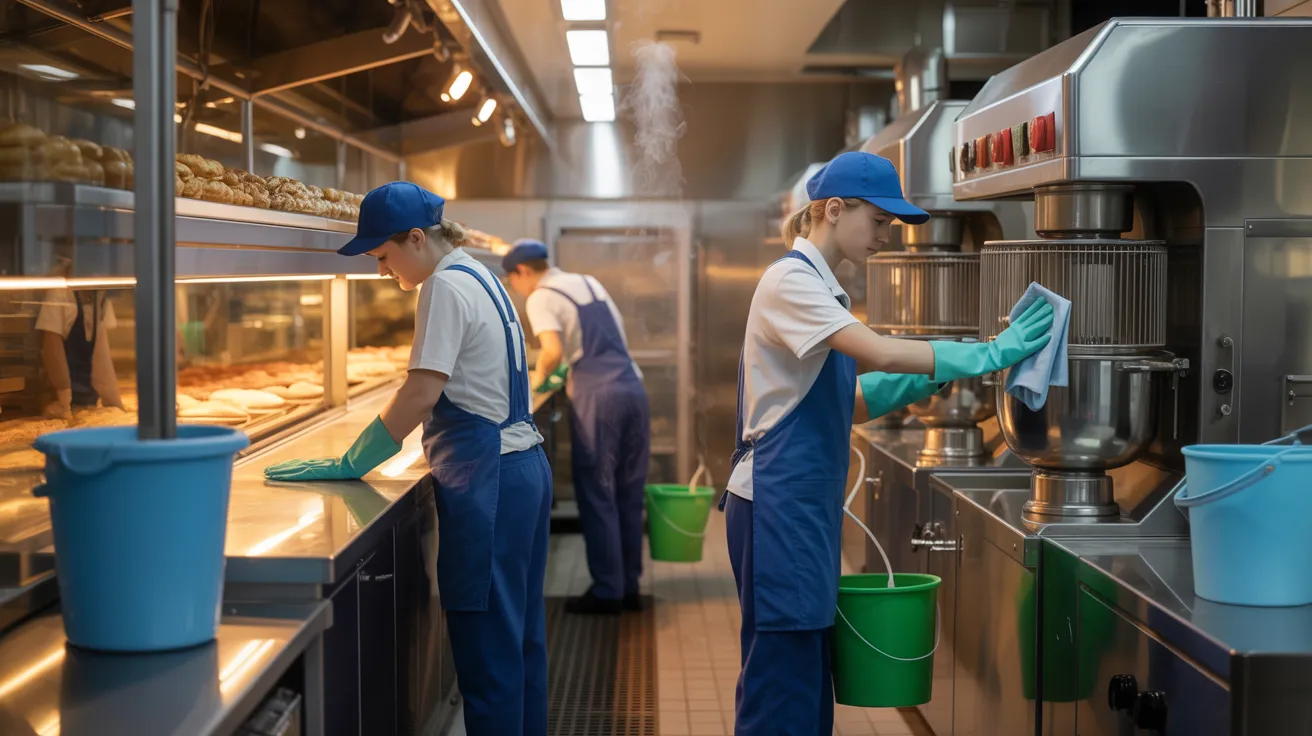
Your operation needs cleaning professionals who disinfect frequently contacted surfaces, cooking and food prep areas, all floor types, and restrooms for food safety and health code adherence. These specific areas are emphasized due to their elevated cross-contamination potential, hazardous walking conditions, and breaches of sanitation codes.
By knowing exactly what gets cleaned, you can make sure your facility's cleaning procedures meet compliance standards.
High-Touch Surface Cleaning
set how often each area is disinfected
confirm adequate sanitization
Cooking Zones, Walking Surfaces, and Restroom Environments
Brampton cleaning services zero in on kitchens, floors, and restrooms as each zone involves different food safety, accident, and wellness concerns. In industrial kitchens, you need degreasing on cook lines, equipment exteriors, drains, prep surfaces, and splash zones to reduce bacterial growth and pest activity.
Floor care that is documented should equally be anticipated. Technicians clean and remove buildup from tile grout, ceramic surfaces, and vinyl floors, then apply suitable dehydration methods so you can limit falls and meet regulatory standards. They also address entryways where moisture and debris migrate indoors.
Restroom cleaning involves sanitizing touchpoints, fixtures, partitions, dispensers, and waste containers, replenishing amenities and managing odor. They also service restaurant moprooms, where chemical storage, sink hygiene, and drainage conditions can affect sanitation compliance and staff safety daily.
How Food Safety Cleaning Benefits Brampton Operations
Brampton businesses need to establish food-safe cleaning standards for meeting legal standards and passing inspections. You also minimize cross-contamination by cleaning and sanitizing food-contact surfaces, equipment, and high-touch areas correctly. Most importantly, you safeguard community wellness by reducing the chance of food poisoning in your establishment.
Health Code Compliance
Food operations in Brampton face stringent health requirements, making food safety cleaning critical to fulfilling health code requirements, ensuring the safety of patrons, and preventing enforcement action. You must maintain clean food preparation areas, documented cleaning schedules, proper chemical use, and verifiable staff procedures that correspond to municipal and provincial inspection expectations.
When cleaning standards deteriorate, violations, corrective directives, brand harm, and service interruption from subsequent audits or compliance reviews become risks.
Contamination Control
Adhering to health code standards requires your expertise in stopping cross-contamination throughout daily food handling and cleaning. You need to isolate uncooked items from finished products, clean prep surfaces between tasks, and keep chemicals away from food-contact items. Organized systems minimize contamination events and maintain ongoing regulatory adherence.
Building allergen isolation prevents key allergens from reaching shared surfaces, containers, or equipment. Utilize dedicated cutting boards, color-coded tools, and precise instrument labeling so team members won't blend products in cooking or serving.Enforce handwashing after handling uncooked meats, shellfish, egg items, or allergen substances. Swap wiping cloths regularly, and confirm disinfectant efficacy using test strips. When you train staff to follow these controls every shift, you create a cleaner, safer operation that exceeds Brampton's safety standards consistently.
Community Health Safety
Should cleaning standards collapse, you don't simply risk a failed inspection—you increase the potential of contamination-related sickness harming customers, staff, and the wider Brampton community. You also undermine your responsibility in safeguarding community wellness, especially in busy food facilities where contamination can spread quickly through surfaces, equipment, and touchpoints.
You need sanitation procedures that eliminate contaminants, sanitize correctly, and verify results. That means following exposure periods, employing authorized sanitizers, recording cleaning times, and educating employees to meet regulatory standards. These controls support pathogen reduction by lowering microbial loads before they reach food or hands. In Brampton, rigorous cleaning shields at-risk groups, limits outbreak potential, and helps you demonstrate due diligence. When you clean to standard, you don't just meet regulations—you substantially decrease danger and promote secure food handling citywide.
How Does Cleaning Support Food Safety Compliance?
Maintaining strict sanitation practices ensures food safety compliance by lowering contamination exposure, managing pathogen expansion, and keeping your facility compliant with sanitation requirements under HACCP-based programs and public health regulations. You validate that contact surfaces appear visibly clean and microbiologically controlled, supporting documented preventive controls and inspection readiness.
Well-executed cleaning efforts also enhance allergen mitigation by clearing residues that can cause undeclared allergen exposure.
Establishing When to Plan Commercial Cleaning
spill incidents, and following-maintenance work
Drain systems, vents, storage racks, and hard-to-reach zones need weekly or monthly service, informed by inspection findings and sanitation records.
Selecting the Right Brampton Cleaning Experts: Key Considerations
Screen providers initially by their food-safe sanitation requirements—not budget alone. You need to verify that every company meets CFIA, public health, and HACCP standards for your operation. Demand proof of insurance, WHMIS compliance, training records, and management systems. Evaluate technician understanding of contamination dangers, chemical safety, and documented sanitation practices.
You should further examine service consistency and answerability. Request testimonials from Brampton food businesses, then review response times, corrective action plans, and communication protocols. Validate the company supports supplier audits and can supply compliance documentation to authorities or third parties. Confirm equipment is maintained, colour-coded tools are used appropriately, and site-specific hazards are recognized. A experienced service protects compliance, product quality, and your reputation in the market.
Which elements are part of a hygiene cleaning program?
Document a framework that outlines every sanitation task, standard, and responsibility before starting production. You should record cleaning frequencies, approved chemicals, dilution rates, contact times, tools, and verification methods for each area, surface, and device. Remember to add pre-operational inspections, corrective actions, and employee training requirements.
Your framework should also include cross-contamination prevention, waste disposal, pest management measures, and scheduled documentation for bathrooms, drainage, ground surfaces, and food-handling zones. Specify how you'll distinguish raw from ready-to-eat operations, support ingredient tracking, and copyright accurate allergen labeling through validated cleaning between product changes. You should define accountability, maintain signed records, and review results against regulatory standards, HACCP controls, and customer requirements. When gaps appear, adjust procedures immediately and retrain staff.
Commonly Asked Questions
Will sanitation providers manage overnight shifts at Brampton properties?
Yes, you can book cleaning services to manage overnight shifts in Brampton facilities. You'll organize overnight sanitation around production schedules, access controls, and personnel needs. Services generally map overnight logistics to minimize interruption, maintain standards, and document completed tasks. You should verify response times, management, lockout procedures, and waste handling before beginning service. If you operate controlled environments, you'll also need documentation that enable audits and compliance verification.
Can sanitation professionals handle hazardous incidents?
Yes, you can locate several Brampton sanitation experts offering emergency response services. They handle contamination, evaluate risks, contain affected areas, and perform swift decontamination to reduce exposure and prevent disruption. You should confirm timeframes, training credentials, protocols, and disposal methods. If your facility must meet standards, pick a provider that logs events, maintains standards, and supports audits.
Are environmentally safe disinfectants appropriate for food-handling equipment?
Absolutely, plant-based sanitizers remain secure for food preparation areas when you select items marked food-safe and satisfying regulatory requirements. You must validate application timing, dilution ratios, and rinse requirements before use. Plant based formulas lower chemical burden, though you should gather proof of efficacy against harmful bacteria. For keeping surfaces residue-free, follow manufacturer directions precisely and ensure your disinfectant complies with applicable food industry sanitation standards.
Will maintenance plans accommodate production fluctuations?
Without question, sanitation programs adjust easily for production fluctuations. Modify schedules, staffing, disinfectants, and confirmation procedures to correspond to seasonal patterns while maintaining regulatory adherence. Minimize equipment downtime by planning sanitization around changeovers, peak seasons, and operational patterns. Also update procedural documents, employee training, and environmental monitoring to address periodic risks, emerging allergens, or increased soiling. Consistent reviews keep your plan current.
Do professional cleaning services educate staff on sanitation best practices?
Certainly, professional cleaning experts train your staff on hygiene protocols. You obtain staff training on correct chemical practices, contact times, cross-contamination prevention, machine disassembly, and documentation procedures. They generally coordinate view this guide instruction with HACCP, GMP, and CFIA or local public health requirements. Many also run sanitation audits to check standards, uncover shortcomings, and reinforce corrective actions. This helps you copyright standard processes, satisfy audits, and reduce food safety risks every day.
Summary
Partnering with Brampton commercial cleaning and food safety experts means more than cleaning—it ensures your facility meets inspection standards and your protocols remain compliant. From processing facilities to kitchens, each cleaned area and organized section reduces health hazards and prevents major expenses. By scheduling maintenance at suitable frequencies and implementing a thorough cleaning program, you protect your workforce, clients, and your image. In a tightly controlled market, clean environments can't be overlooked—they're vital to proper management.